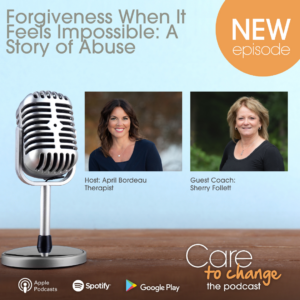
Forgiveness is difficult in any painful relationship. But what does forgiveness look like when the hurt involves abuse? And can you forgive someone while still maintaining boundaries, requiring accountability, and choosing safety?
In this episode, April Bordeau is joined by Care to Change coach Sherry Follett and “Lynn,” a mother whose daughter experienced domestic abuse. Lynn shares the impact abuse had not only on her daughter, but on their entire family, and the ongoing struggle of forgiving someone who caused significant harm.
Together, they explore the complexity of abuse, why leaving is rarely as simple as it appears from the outside, and why forgiveness should never be confused with excusing harmful behavior or restoring unsafe relationships.
In this episode, you’ll hear about:
- How abuse can be emotional, verbal, psychological, financial, spiritual, sexual, or physical
- Why recognizing and naming abuse is an important part of healing
- Common barriers that make leaving an abusive relationship difficult
- Why forgiveness is often a process rather than a one-time decision
- What forgiveness does not mean: forgetting, excusing, trusting again, removing consequences, or minimizing what happened
- Why forgiveness and reconciliation are not the same thing
- How healthy boundaries and limited access can coexist with forgiveness
- The grief that accompanies the loss of trust, safety, relationships, and the future you thought you would have
- Why family members may move through forgiveness at very different speeds
- How abuse creates a ripple effect throughout an entire family
- Resources that can help survivors and their families move toward safety and healing
One of the most important reminders from this conversation is that forgiveness does not mean giving someone continued access to you. It does not remove responsibility or consequences. Instead, forgiveness can become a choice to release yourself from remaining emotionally chained to what happened, even when the feelings take much longer to follow.
If you are experiencing abuse or questioning whether a relationship is abusive, you do not have to navigate it alone. Seek support from a qualified professional or domestic violence organization. Safety comes first, and healing is possible.
Resources:
- Domestic violence hotline number(s) — Text 88788 or call 800-799-SAFE, or locally call 317-745-1496.
- Sheltering Wings – for shelter and resources
- Leslie Vernick — The Emotionally Destructive Marriage and The Emotionally Destructive Relationship
- Natalie Hoffman — Is It Me? Making Sense of Your Confusing Marriage
- Lysa TerKeurst — Forgiving What You Can’t Forget
If you are struggling with forgiveness after being deeply hurt, Care to Change is here to walk alongside you with compassion and competent care.