What if you’re getting enough sleep, taking weekends off, maybe even going on vacation, and you’re still exhausted?
You may not just be tired.
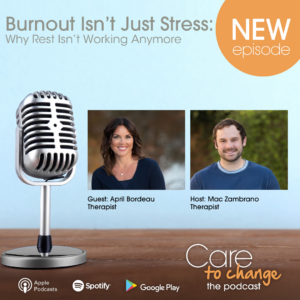
In this episode of the Care to Change Podcast, Mac Zambrano talks with therapist and Care to Change Managing Director April Bordeau about the difference between everyday stress and burnout, why traditional rest sometimes stops working, and how to recognize when exhaustion is telling you that something deeper needs attention.
Burnout doesn’t always mean you need another day off. Sometimes you need a different kind of rest. You may be physically rested but mentally overloaded, relationally depleted, emotionally exhausted, spiritually dry, or carrying responsibilities that were never yours to carry.
April and Mac explore what happens when caregivers, leaders, parents, pastors, therapists, first responders, and other helpers spend so much time caring for others that they stop noticing their own limits.
In this episode, you’ll hear about:
- The difference between normal stress and burnout
- Warning signs that stress may be becoming burnout
- Why sleep, weekends off, and vacations don’t always restore us
- How burnout can show up as irritability, numbness, resentment, detachment, difficulty concentrating, or loss of motivation
- The different kinds of exhaustion we experience: physical, emotional, mental, relational, spiritual, and professional
- Why over-functioning, constant availability, and tying your identity to productivity can contribute to burnout
- How chronic stress can begin showing up in the body
- Why your current season of life matters when evaluating your capacity
- The difference between temporary relief and addressing the root of depletion
- How boundaries, delegation, and sustainable rhythms can help
- What Jesus models about solitude, withdrawal, prayer, and sharing responsibility
- Why burnout can be information rather than evidence that you aren’t strong enough
The goal isn’t simply to get better at recovering from an unsustainable life. The goal is to build a way of living that you don’t have to keep recovering from.
If you recognize yourself in this conversation, you don’t have to wait until you’re completely depleted to make a change. Pay attention to what your exhaustion may be telling you, and consider what kind of support, boundaries, restoration, or deeper healing you need.
Care to Change is here to walk alongside you.
Other episodes that may help: