What if your exhaustion isn’t just about being tired? What if your body has been trying to tell you something you’ve been too busy to notice?
Brain fog, irritability, trouble sleeping, digestive issues, anxiety, and even emotional numbness can all be signs that your nervous system is overwhelmed. When stress becomes a constant part of life, our bodies can remain in survival mode long after the stressful situation has passed.
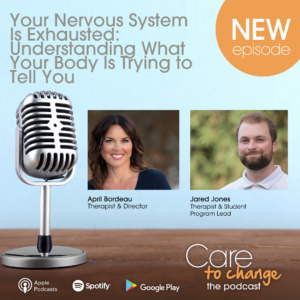
In this episode of the Care to Change Podcast, therapist April Bordeau sits down with therapist Jared Jones to explore how chronic stress affects the nervous system, why we sometimes feel disconnected from our emotions, and what it takes to begin recovering.
Together, they discuss the everyday habits that quietly drain our capacity, how to recognize what our bodies are communicating, and practical ways to move from survival mode toward greater emotional and physical well-being.
In This Episode, You’ll Hear About:
- Common signs of an overwhelmed nervous system, including brain fog, irritability, fatigue, and emotional numbness
- Why the body can remain in survival mode even after a stressful experience has ended
- How caregiving, perfectionism, grief, difficult relationships, and high-pressure environments contribute to nervous system exhaustion
- Everyday habits that increase stress, including multitasking, overstimulation, overcommitment, and inadequate rest
- Why scrolling, watching television, or simply taking time off may not provide the restoration your nervous system needs
- Practical ways to begin recovering through intentional rest, mindfulness, gratitude, and healthier boundaries
- How to reconnect with your emotions when you’ve become numb or disconnected from your body
- Why safe relationships and professional counseling can play an important role in healing
Resources Mentioned:
- The Ruthless Elimination of Hurry by John Mark Comer
- Atlas of the Heart by Brené Brown
Take a Moment to Reflect:
What is your body trying to tell you that you’ve been too busy to hear?
Pay attention to the tension in your shoulders, the tightness in your jaw, your energy level, or the emotions you’ve been avoiding. These signals may be invitations to slow down and consider what you need.
You don’t have to wait until you’re completely exhausted to begin caring for yourself.
At Care to Change, we provide practical solutions for positive change through counseling, groups, and intensive therapy services.
Learn more at www.caretochange.org.
Connect with Care to Change:
Website: www.caretochange.org
Call: 317-790-9396
Text: 317-979-7133
Next Episode: Recovering from Burnout: Healing the Whole Person